



INTRODUCTION
The Kashmiri Pheran (also spelled Phiran or Feran) is far more than just a piece of clothing—it’s a living symbol of Kashmir’s cultural heritage, climate adaptation, and artistic excellence.
Here’s everything you need to know about this iconic garment.
Word Origin
The word “Pheran” likely derives from the Persian word “Perahan,” meaning shirt or cloak.
Traditional Length and Fit
- Traditional style: Extended to the feet like a flowing gown, worn by both men and women until the late 19th century
- Modern variations:
- Men’s pherans are typically knee-length
- Women’s pherans extend from calf to ankle-length
- Both styles feature wide, loosely gathered sleeves

Materials and Fabrics
Winter Fabrics
- Pure Wool/Loch: A pheran made of wool is traditionally called a ‘loch’ Wikipedia
- Raffal Wool: Medium-range quality, warm and durable
- Tweed/Pattu: Originally made using tweed or pattu material, fitted with a cloth lining called ‘poss’ Kashmiri Pheran
- Pashmina: Luxury fabric for premium pherans
- Velvet (Makhmal): Considered party wear, often with heavy embroidery
Summer Fabrics
- Cotton
- Linen
- Silk
- Georgette
- Muslin
- Cashmilon (synthetic, budget-friendly option)
Embroidery Styles
Kashmiri pherans showcase some of the world’s finest embroidery traditions:
Tilla Work
- Sozni Embroidery
- Aari Work
- Zari Work
- Dabka Work
- Kashida Embroidery
The Poeczh (Inner Lining)
The poeczh is a lightweight lining worn beneath the pheran, primarily to shield it from potential burns caused by the kangri and provide an extra layer of insulation during winter. Traditionally, Kashmiris wore two layers: an inner lightweight pheran (poeczh) and an outer heavy pheran
Difference between Pheran vs Kurta
Pheran | Kurta |
Loose and wide garment | More fitted or straight-cut |
Mostly worn in winter | Worn in all seasons |
Made of wool, tweed, or thick fabric | Made of cotton, silk, or linen |
Traditional dress of Kashmir | Worn all over India |
Designed mainly for warmth | Designed for style and comfort |
Styling your kashmiri pehran
- Pair a pheran with leggings or skinny jeans
- Add a belt to define the waist
- Wear ankle boots, juttis, or mojaris
- Choose statement earrings with a plain pheran
- Short-length pherans work well for casual or college looks
- Layer with a Pashmina shawl for an elegant winter style
Gender Differences
Men’s Pherans
- Simple and plain designs
- Knee-length in modern styles
- Minimal or no embroidery
- Made from tweed, wool, or cotton
- Earth tones: blacks, greys, whites, browns
Women’s Pherans
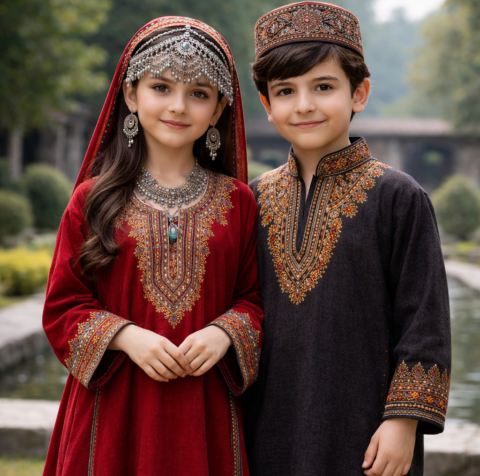
- Colorful and ornate
- Longer length (calf to ankle)
- Narrower at the top with a flared bottom
- Elaborate embroidery on neckline, cuffs, borders
- Wide range of colors, including vibrant modern hues
- Often feature mirror work and sequins

Climate Adaptation
Kashmir’s harsh winter climate, especially the 40-day Chillai Kalan period of extreme cold, deeply influenced the pheran’s design and significance . The pheran’s long, layered form is perfectly suited to trap body heat
Economic and Artisanal Significance
Artisan Craft
Many artisans who embroider pherans are women working from their homes, providing economic opportunities while preserving cultural heritage. This tradition of home-based embroidery allows women to contribute to household incomes.
Production Time
Artisans can spend weeks to months creating a single embroidered pheran, depending on the intricacy of the design. Hand embroidery commands premium prices and is highly valued.
Market Demand
As winter approaches, demand rises so much that many Kashmiri tailors stitch only pherans throughout the season
Care and Maintenance
Storage
- Store in cool, dry places
- Protect from moths using natural deterrents
- Avoid prolonged sunlight exposure
Cleaning
- Woolen pherans: Dry clean only to preserve embroidery
- Cotton pherans: Gentle hand wash or dry clean
- Velvet pherans: Always dry clean
Kashmiri pherans price start from around ₹450 for basic Turkish wool varieties. The typical price range varies depending on fabric, embroidery, and quality
Maximum Price: ₹5,000 – ₹8,000+
Kashmiri pherans are made in Kashmir Valley, specifically in the Jammu and Kashmir region of India.
Primary Production Centers: