




Skincare Routine for Beginners: Step-by-Step Guide
Your Simple, No-Fuss Guide to Healthy, Glowing Skin
Skincare • Beginner Guide • 2026 •
Skincare routine for beginners doesn’t have to be hard or confusing. In fact, with so many products in stores and different advice online, it’s easy to feel lost. However, the good news is that simple routines often work best, because your skin usually responds better when you keep things basic and consistent. Therefore, starting with a minimal approach is always a smart choice.
First, this guide will help you understand your skin type. Then, you’ll learn how to build an easy morning and night skincare routine for beginners. Moreover, everything is explained in simple language, so you won’t feel overwhelmed. In addition, there are no complicated steps or extra products to worry about. As a result, you can follow the routine easily and stay consistent.
Finally, with consistency and patience, a skincare routine for beginners can deliver clear, glowing skin without complicated steps. Ultimately, simple habits practiced daily lead to the best long-term results.
Remember: Consistency beats complexity every single time. A 3-step routine done daily is far more effective than a 12-step routine done twice a month.
1. The Importance of a Skincare Routine
Your skin works hard every day. In fact, it shields you from pollution, bacteria, UV rays, and daily environmental stress. However, without proper care, this constant exposure slowly leaves its mark. As a result, you may notice dullness, breakouts, dryness, and even premature ageing over time.
Because of this, a consistent skincare routine helps solve these problems. More importantly, here’s why it truly matters:
- First, it keeps skin clean and free from clogged pores.
- Next, it helps prevents and reduces acne, blackheads, and breakouts.
- In addition, it locks in moisture and fights dryness and peeling.
- Moreover, it slows down premature ageing — fine lines, wrinkles, and uneven tone.
- Finally, it builds a strong skin barrier that protects you long term.
Ultimately, the real secret isn’t which products you use. Instead, it’s how consistently you use them. In other words, skin responds to daily habits, not occasional effort.
Key Insight: UV exposure causes up to 80% of visible skin ageing. That alone makes sunscreen the single most important skincare step you can take.
2. At What Age Should You Start a Skincare Routine ?
One of the biggest myths in skincare is that it’s only for adults. In reality, that’s simply not true. Instead, the right time to start is whenever your skin begins to change — which, for most people, happens in the early teen years. However, starting later is always better than not starting at all.
| Age Group | What’s Happening to Skin | Routine Focus |
|---|---|---|
| 10–12 years | Skin starts producing more oil | Gentle cleansing + basic moisturiser |
| 13–17 years | Hormones trigger acne, oiliness, and sensitivity | Cleanser + moisturiser + SPF (start now!) |
| 18–25 years | Good time to build solid habits before ageing begins | Full basic routine + add targeted serums |
| 25+ years | Fine lines and uneven tone may begin to appear | Full routine + antioxidants + retinol when ready |
| Any age | It’s never too late to start | Begin with the basics and build from there |
Heads Up: Skincare is for everyone — all ages, all genders, all skin tones. Starting a routine at any age will improve your skin’s health and appearance.
3. Determine Your Skin Type
Before you buy a single product, you need to know your skin type. Because using the wrong products can make breakouts worse, dry skin drier, and oily skin oilier, this step is very important. In general, there are five main skin types. So, here’s how to identify yours:
| Skin Type | How It Feels | Common Signs | Best For |
|---|---|---|---|
| Normal | Comfortable, balanced | Small pores, rarely breaks out | Lightweight products |
| Oily | Shiny, greasy — especially T-zone | Enlarged pores, frequent acne | Oil-free, gel formulas |
| Dry | Tight, rough, sometimes flaky | Dull look, uncomfortable after washing | Rich creams, hydrating serums |
| Combination | Oily forehead/nose, dry cheeks | Different textures in different areas | Balanced, gentle products |
| Sensitive | Easily irritated or reactive | Redness, itching, stinging | Fragrance-free, hypoallergenic |
Quick At-Home Skin Type Test
Try this simple test at home — it takes less than an hour:
- Wash your face with a gentle cleanser
- Pat dry and don’t apply anything
- Wait 45–60 minutes
- Observe — shiny all over (oily), tight and flaky (dry), shiny only on the forehead and nose (combination), comfortable (normal), or easily irritated (sensitive)
If you want a more detailed explanation, the Dermatologist’s guide on identifying your skin type explains the process step by step.
4. The Basic Steps of a Skincare Routine
Every beginner routine — no matter your skin type — is built on three essential steps. Therefore, master these first. After that, everything else comes later.
| Step | Product | What It Does | When |
|---|---|---|---|
| 1 | Cleanser | Removes dirt, oil, sweat, and pollution | AM + PM |
| 2 | Moisturiser | Hydrates skin and strengthens the skin barrier | AM + PM |
| 3 | Sunscreen | Blocks UV rays — the #1 cause of premature ageing | AM only |
Three products. Twice a day (minus sunscreen at night). In short, that’s your complete basic skincare routine for beginners. Therefore, nothing more is required to start seeing results.
💡
Budget Note:
A solid 3-step routine costs as little as ₹600–₹1,500 per month using good brands.
You don’t need expensive products to have healthy skin.
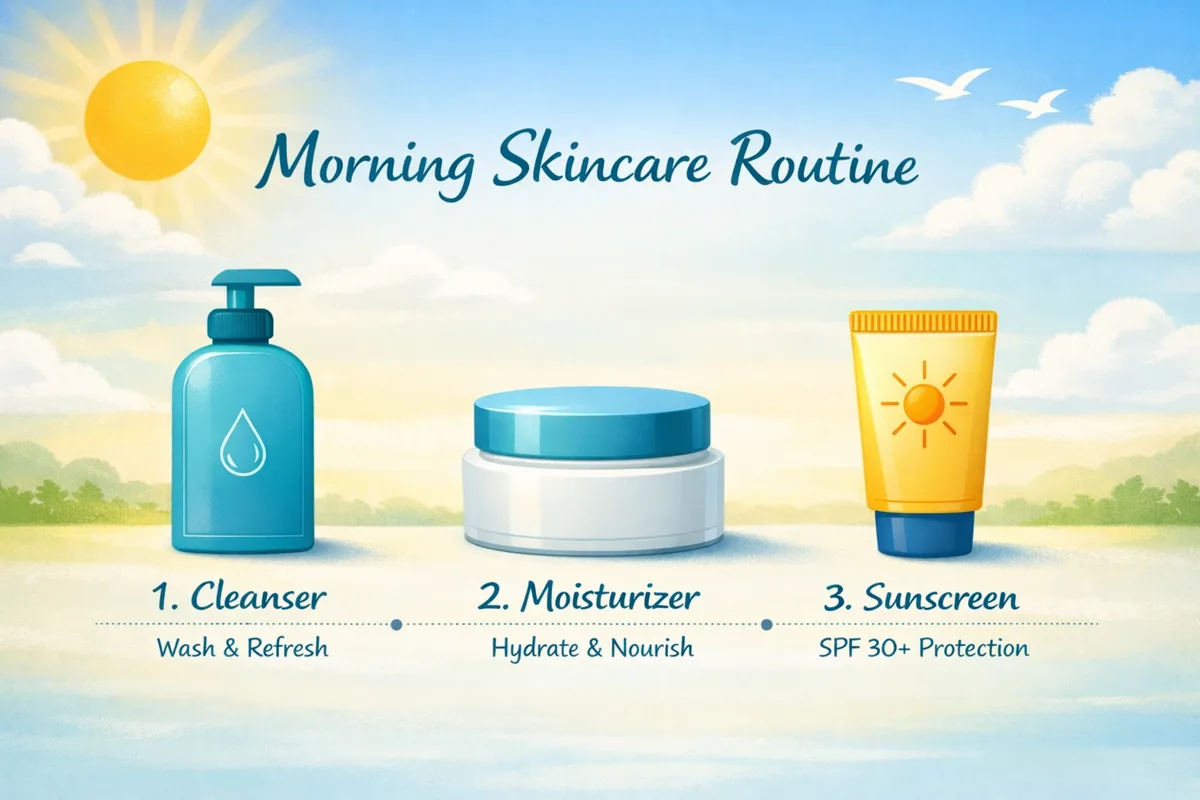
5. What To Do For Morning Skincare ?
Your morning routine is all about protection. You’re preparing your skin to face the day — sun, pollution, dry air, and stress.
Keep it simple and light. Here’s exactly what to do:
- Step 1 — Cleanser – Wash away overnight sweat and oil. Use lukewarm water and a gentle cleanser. 60 seconds is enough — no need to scrub.
- Step 2 — Moisturiser – Apply while skin is slightly damp. Choose a lightweight formula in the morning — a gel or lotion works well for most skin types.
- Step 3 — Sunscreen SPF 30+ – This is non-negotiable. Apply a nickel-sized amount to your face and neck. Reapply every 2 hours if you’re outdoors.
.
To compare both routines, this morning vs night skincare routine article explains when each step matters most.
☀️
Morning Goal:
Cleanse away the night. Hydrate. Protect. Done in under 5 minutes.
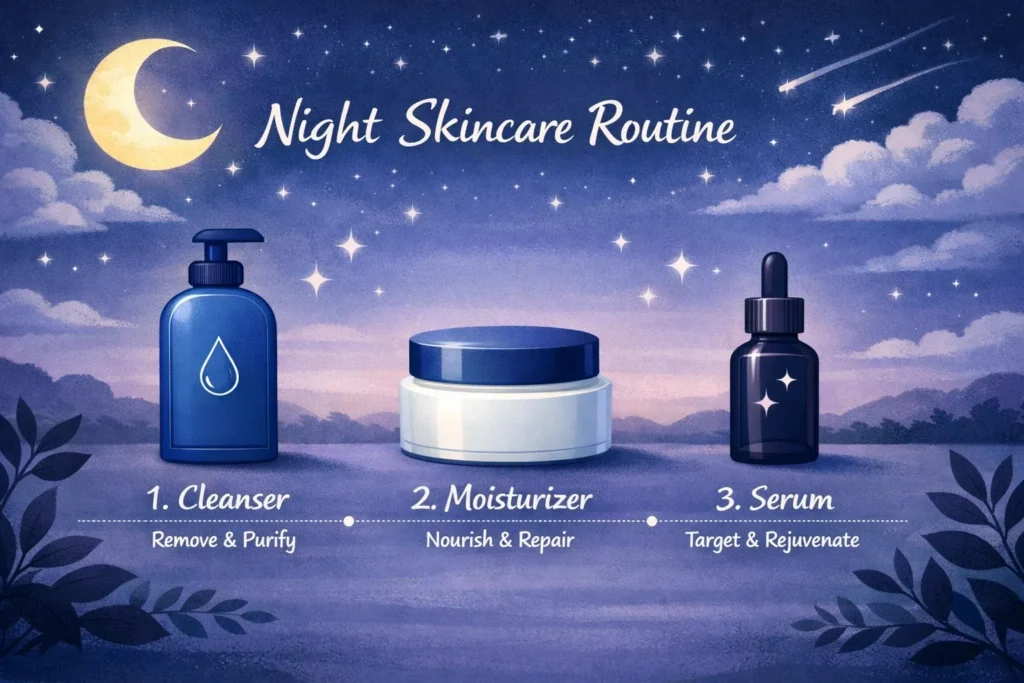
6. What Does Your Night time Skincare Look Like ?
At night, your skin switches into repair mode. As a result, cell regeneration increases significantly while you sleep. Therefore, this is the best time to support that healing process.
Your night routine is about repair and nourishment — not protection:
- Step 1 — Cleanser – Remove everything — makeup, sunscreen, pollution, and oil buildup from the day. If you wore heavy makeup or SPF, double cleanse (oil-based cleanser first, then your regular one).
- Step 2 — Moisturiser – Use the same moisturiser or a slightly richer one at night. Your skin has more time to absorb it while you sleep.
- Step 3 — Optional Treatment – Once your skin has adjusted to the basics (after 4–6 weeks), you can add a gentle treatment like a hyaluronic acid serum or niacinamide. More on this below.
| Routine Aspect | Morning Routine | Night Routine |
|---|---|---|
| Primary Goal | Protection | Repair + Nourishment |
| Sunscreen | Yes — always | No — not needed |
| Cleanser | Gentle wash | Thorough — remove all buildup |
| Moisturiser | Light formula | Can be richer |
| Treatment | Vitamin C (optional) | Retinol / HA serum (optional) |
| Time Needed | 3–5 minutes | 5–7 minutes |
Night Goal: Cleanse deeply. Nourish. Let your skin do its repair work overnight.
7. Add in Extra Steps as Needed
Once you’re comfortable with the basics for 4–6 weeks, you can start adding optional steps based on your skin’s specific needs.
At that point, however, add one product at a time. Then, wait at least 2 weeks before introducing anything new.
| Extra Step | What It Does | When to Add | Beginner Tip |
|---|---|---|---|
| Toner | Balances pH, adds light hydration | After 4–6 weeks | Choose alcohol-free only |
| Niacinamide Serum | Reduces pores, controls oil, fades spots | After 4–6 weeks | Safe for all skin types — great first serum |
| Hyaluronic Acid | Deep hydration, plumps skin | After 4–6 weeks | Apply to damp skin for best results |
| Exfoliator (AHA/BHA) | Removes dead skin, unclogs pores | After 2–3 months | Max 2× per week — never overdo it |
| Retinol | Fights acne, speeds cell renewal, anti-ageing | After 3+ months | Start 2×/week — dryness is normal at first |
| Eye Cream | Hydrates the delicate under-eye area | Anytime | Pat gently using your ring finger |
⚠️
Heads Up:
Never mix retinol and AHAs/BHAs on the same night — this can cause severe irritation. Introduce one active at a time and give your skin time to adjust.
8. Choosing the Right Skincare Products
The shelves are full of options. Here’s how to cut through the noise and choose what actually works for you.
What to Look For ?
- Products labelled for your specific skin type — oily, dry, sensitive, or combination
- ‘Non-comedogenic’ on the label — means it won’t clog your pores
- Fragrance-free if your skin is sensitive or reactive
- Short ingredient lists with recognisable actives like ceramides, Glycerin, or hyaluronic acid
What to Avoid ?
- Influencer-recommended products — their skin type may be completely different from yours
- Products with alcohol (denat.) high on the ingredient list — very drying
- Too many active ingredients too soon — this overwhelms and irritates skin
- Anything that causes stinging, burning, or redness — that’s a warning sign, not normal
📌
Golden Rule:
Patch test every new product on your inner arm or jaw for 24 hours
before applying it to your full face.
9. Tips for a Healthy Skincare Routine
This skincare routine for beginners is simple and effective for daily use. These small habits make a bigger difference than any product you can buy:
- Be consistent – Do your routine every morning and night — even on lazy days. Two minutes counts.
- Introduce slowly – One new product every 2 weeks. This way you’ll know exactly what’s working.
- Give products time – Most skincare takes 4–8 weeks to show results. Don’t switch too early.
- Stay hydrated – Drink 8 glasses of water a day. Hydration starts from the inside.
- Change your pillowcase – Do this once a week. Pillowcases collect oil and bacteria — and transfer them to your face every night.
- Clean your phone screen – It touches your face more than you think — and carries more bacteria than a toilet seat.
- Eat well – High-sugar diets trigger inflammation and breakouts. Antioxidant-rich foods (berries, leafy greens) support skin health.
- Sleep 7–9 hours – Your skin repairs itself during deep sleep. Poor sleep leads to dullness, puffiness, and dark circles.

10. Common Skincare Mistakes to Avoid
Most beginner skin problems come from a handful of avoidable mistakes:
| Mistake | Why It’s a Problem | What to Do Instead |
|---|---|---|
| Over-washing | Strips natural oils, increases oil production | Cleanse twice daily only |
| Skipping sunscreen | Causes premature ageing and sun damage | Use SPF 30+ every morning |
| Too many products | Leads to irritation and breakouts | Start with 3 products only |
| Following trends | Not suited for every skin type | Choose products for your skin |
| Not removing makeup | Clogs pores overnight | Cleanse thoroughly at night |
| Expecting fast results | Skin renews slowly (28–60 days) | Wait 4–6 weeks minimum |
| Popping pimples | Causes scars and dark spots | Use salicylic acid spot treatment |
11. Remember These Important Tips
Before you start building your routine, keep this quick checklist handy:
| Important Tip | Why It Matters |
|---|---|
| Start with just 3 products | Simpler routines are easier to maintain and truly effective |
| Know your skin type | Using the right products prevents irritation and breakouts |
| Sunscreen every morning | The most powerful step to prevent ageing and damage |
| Patch test new products | A 24-hour test can save your entire face from reactions |
| Be patient | Skin needs weeks — not days — to show real results |
| Introduce one product at a time | Helps you identify what works and what doesn’t |
| Consistency over perfection | A simple daily routine beats a complex one done rarely |
12. Benefits of a Skincare Routine for Beginners
Still on the fence? Here’s what you genuinely gain from building a consistent routine:
- Clearer skin – Regular cleansing and targeted care reduces acne, blackheads, and clogged pores over time
- Better texture – Consistent moisturising smooths rough, dry, or bumpy patches — skin feels softer
- Even skin tone – Sunscreen and gentle exfoliation fade dark spots and reduce uneven pigmentation
- Confidence boost – Feeling comfortable and good in your skin has a real impact on how you show up every day
- Long-term protection – Habits you build now protect your skin from visible ageing for decades ahead
- Saves money long term – Preventing skin damage is far cheaper than treating it later with professional procedures
13. Frequently Asked Questions
How long does it take to see results from a skincare routine?
Most people notice better hydration and softer texture within 2–4 weeks. However, for significant changes — such as reduced acne, faded spots, or smoother skin — allow 8–12 weeks. Because skin cells take 28–60 days to fully renew, patience is the most important ingredient.
Can beginners use serums straight away?
It’s best to wait. Instead, get comfortable with your 3-step basic routine for 4–6 weeks first. Then, add one gentle serum — niacinamide or hyaluronic acid are ideal starting points. In fact, both are gentle, effective, and work for almost every skin type.
Is natural skincare better for beginners?
Not automatically. In fact, natural doesn’t always mean safe — lemon juice, baking soda, and raw garlic can seriously damage your skin. However, natural options like aloe vera and rose water can complement your routine. Still, always patch test first. Ultimately, choose products based on your skin type, not just their ingredients list.
How many products do I really need to start?
Just three: a cleanser, a moisturiser, and a sunscreen. In fact, that is a complete, functional skincare routine. However, more products can be added slowly later — but overall, more is not always better, especially at the start.
Can I change my skincare routine often?
No — and this is a very common beginner mistake. In fact, switching products every week means your skin never has time to adjust. As a result, you’ll never know what’s actually working. Therefore, stick to any new routine for at least 4–6 weeks before making changes.
Conclusion — Stay Consistent
A skincare routine for beginners is not about having the most products or the most expensive ones. Instead, it’s about understanding your skin, choosing the right basics, and showing up for your skin every single day.
By now, you’ve learned everything you need: your skin type, the essential steps, how your morning and night routines differ, what products to choose, what mistakes to avoid, and how to level up when you’re ready.
So, now it’s time to actually start. Not tomorrow. Today.
Do that every day for the next 4–6 weeks. Meanwhile, watch what changes. Then, build slowly from there. Ultimately, great skin isn’t about perfection. Instead, it’s about consistency, patience, and knowing what works for you.



[…] Simple Skincare Routine for Beginners […]