

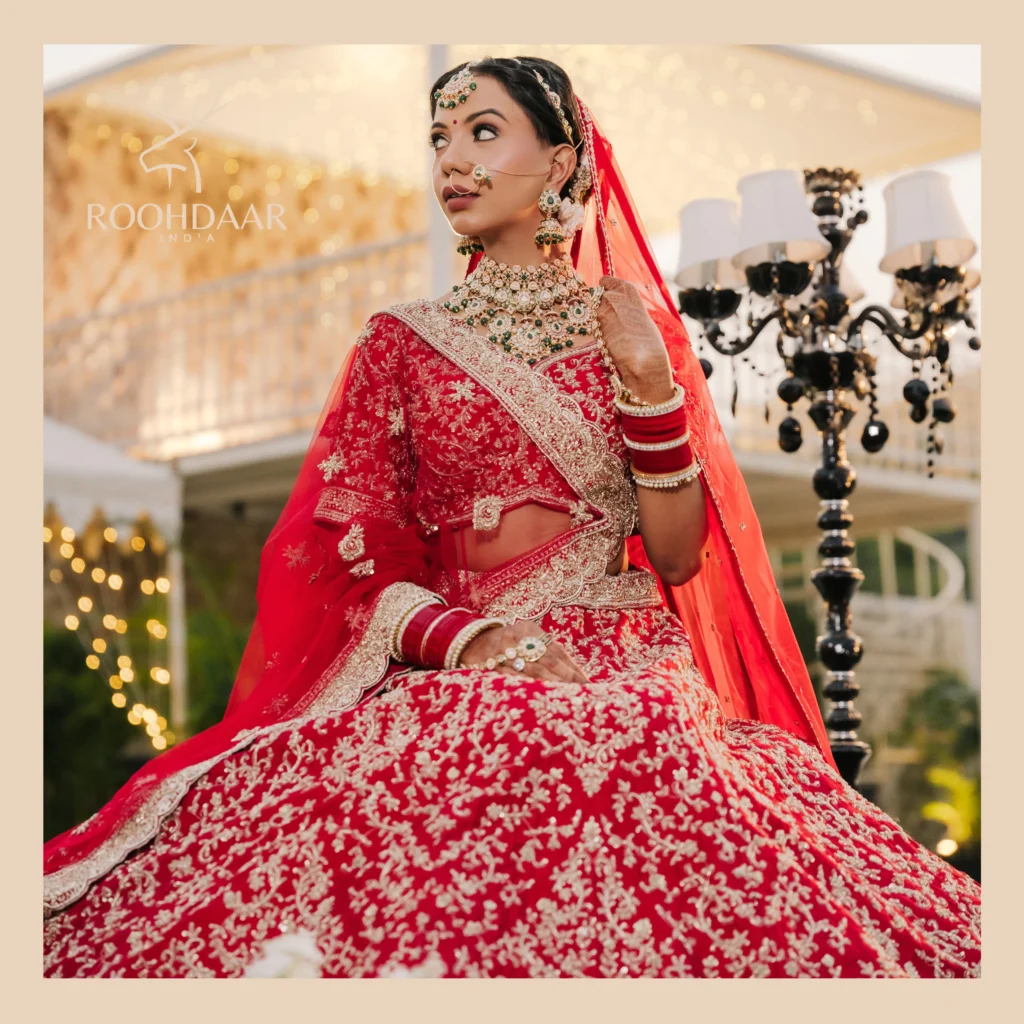

Getting your bridal dupatta style right is one of the most overlooked decisions in bridal planning — and one of the most visible. The dupatta moves in photographs. It carries ritual meaning at pheras. It determines whether your lehenga looks complete or like it’s missing something.
This guide covers every bridal dupatta draping style, fabric choice, color pairing, and wedding-day tip — with regional context for Indian brides and practical advice that goes well past “pin it nicely.”
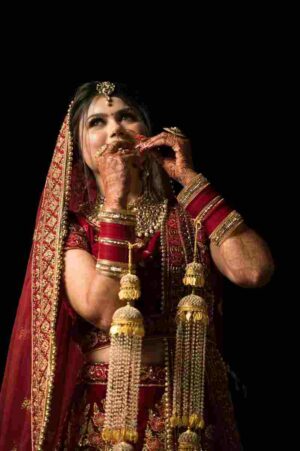
Bridal dupatta style done right: the dupatta completes the look, carries ceremonial meaning, and moves beautifully in photographs.
Why Bridal Dupatta Style Deserves More Attention
The dupatta can function as a veil, an accent, or a full color statement when your lehenga is muted. It can make an outfit look more formal or soften it considerably. The mistake most brides make is treating the dupatta as whatever came with the lehenga set, never reconsidered. But what moves in photographs is what the camera catches first — and nothing moves quite like a dupatta.
Getting your bridal dupatta style right isn’t about following rules. It’s about understanding what each choice actually does to your look, and making it on purpose.
Fabrics: What Each One Actually Does
Fabric determines silhouette, movement, and weight — all three affect how a dupatta drapes and holds through a long wedding day. Georgette and net account for over 65% of bridal dupatta choices at Indian weddings, primarily for their weight-to-drape ratio.
- Net and Organza: Lightweight, sheer, catch light without adding bulk. Wrinkle easily and need pinning to stay in place. The most popular choice for bridal photography.
- Silk and Tissue Silk: More structure, cleaner drape, less movement. Good for crisp, defined folds in photographs. Not ideal if you want flowing, wind-catching looks.
- Georgette: The most forgiving option. Moves, drapes, doesn’t wrinkle badly. If you don’t want to think about your dupatta all evening, georgette is the answer.
- Velvet: Winter-only. Heavy and warm. Not practical for summer weddings or long outdoor functions.
- Banarasi and Brocade: Often heirlooms. Banarasi silk — woven in Varanasi, Uttar Pradesh, a craft recognised by the Indian Geographical Indication registry since 2009 — is among the most prized bridal fabrics. Heavy and structured. Plan the draping style around the fabric weight, not after.
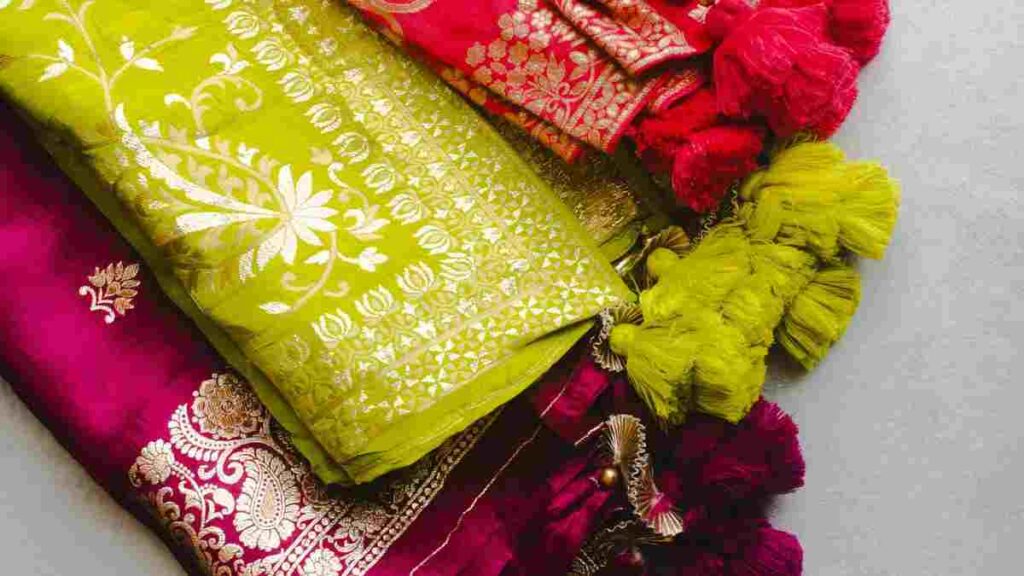
Banarasi silk (centre) and embroidered dupatta fabrics: each has a different weight, drape, and occasion
Indian Bridal Dupatta Style: Regional Traditions Worth Knowing
Indian bridal dupatta style varies significantly by region — and the differences go beyond aesthetics. Many carry ritual meaning that shapes how and when the dupatta is worn.
- Punjabi Weddings: The dupatta is long and full-coverage, draped over the head during pheras. The bridal double dupatta style is especially common here. Phulkari embroidery — a traditional Punjabi needlework technique dating back to the 15th century — often features on bridal dupattas in this region.
- South Indian Bridal Looks: A contrast dupatta over a Kanjivaram silk saree (woven in Kanchipuram, Tamil Nadu) or pattu lehenga is the norm. Draping is typically over one shoulder or across the front.
- Rajasthani Weddings: Heavily embroidered dupattas — often in red or orange with gold gota patti work from Jaipur — draped over the head and pinned elaborately at the crown.
- Bengali Weddings: Draped over the head during rituals, frequently in white and red to complement the traditional Banarasi saree. Carries deep ceremonial significance.
None of these are rules you must follow if they’re not your tradition. But knowing them helps if you’re blending regional elements — or navigating family expectations at a mixed-culture wedding.
.
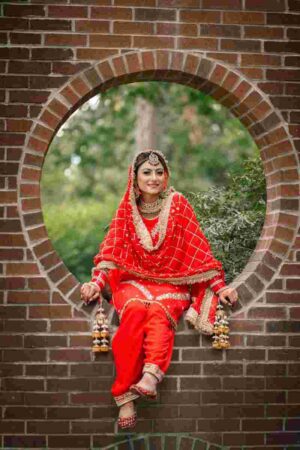
Indian bridal dupatta style varies by region. A Punjabi bride wearing a full head-draped dupatta — one of the most traditional Indian bridal dupatta styles.
Bridal Dupatta Draping Style: The Options and Their Trade-offs
There are more bridal dupatta draping styles than any single guide can cover — but these are the ones that come up most often at Indian weddings. Each has a different function, and the right choice depends on the ceremony, your outfit weight, and how much you want to manage fabric all evening.
Over the Head — Ghunghat Style
The ghunghat bridal dupatta draping style is draped over the head, pinned at the crown, falling down the back or front. The most traditional choice — meaningful for pheras, vidai, and religious rituals. Practical issue: it restricts peripheral vision if it falls too far forward. Have your bridal team ready to adjust between functions.
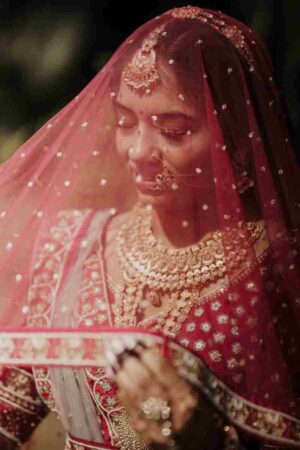
The ghunghat bridal dupatta draping style: net dupatta pinned at the crown, falling forward over the face during ceremonies.
One Shoulder Drape
Pinned at one shoulder, falling diagonally across the body. The most modern bridal dupatta draping style — cleaner, more structured, easier to manage through a long evening. Photographs well from most angles. The go-to style for receptions and post-ceremony functions.
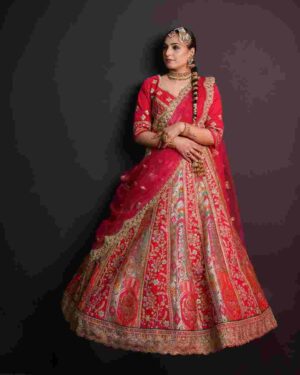
One-shoulder bridal dupatta draping style: the dupatta falls diagonally across the body — the most practical choice for receptions.
Front Drape — Seedha Pallu
Brought over the front like a saree pallu — tucked or pinned at the waist. Keeps the dupatta’s embroidery visible in front-facing photographs. Less traditional in some regions, very common in others. Best choice if you want the dupatta embroidery clearly visible in portraits.
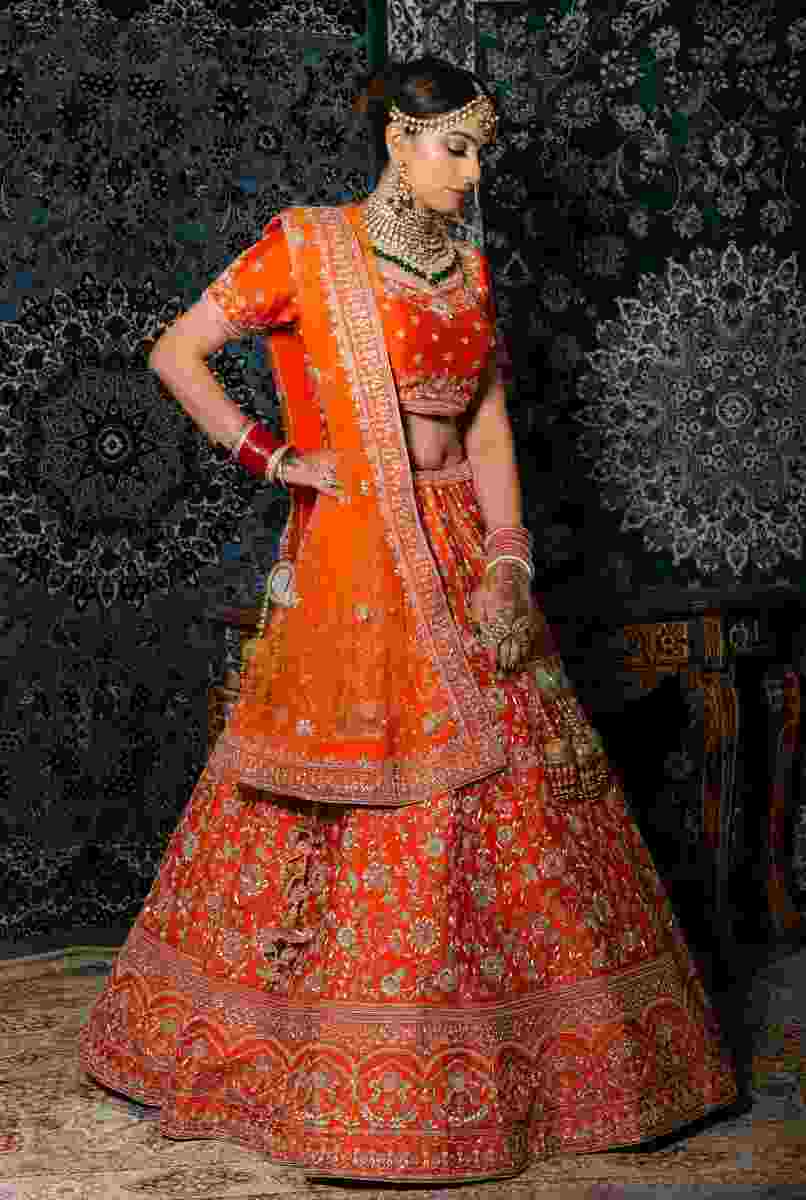
Front drape (Seedha Pallu) bridal dupatta style: keeps the embroidery facing forward and visible in full-length portraits.
Back Drape
Pinned at both shoulders, falling straight down the back like a bridal cape. Works visually only if the dupatta has significant embroidery at the border — that’s what shows. Striking for vidai photographs. Not an all-evening style, but one of the most photographed moments.
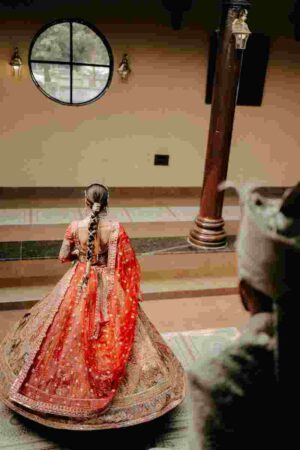
The back drape bridal dupatta draping style: the embroidered border falls straight down the back, creating a striking cape silhouette for vidai photographs.
Bridal Lehenga Dupatta Style: Making Them Work Together
Getting your bridal lehenga dupatta style right is mostly about understanding how the two pieces relate — not just in color, but in weight, embroidery density, and fabric. Most bridal stylists recommend deciding the dupatta alongside the lehenga, not after, since the two pieces shape each other’s visual weight.
- Exact Match: Often the default, rarely the most interesting. Same fabric, color, and embroidery — cohesive, but can look like one undifferentiated piece from a distance.
- Contrast: Pulls out accent colors already in the lehenga’s embroidery. Works best when the contrast color appears in the thread work — so it looks considered rather than mismatched.
- Tonal Coordination: Different shades within the same color family. Dusty rose with deeper mauve. Champagne with gold. Cohesive without being identical — the middle path most stylists recommend.
On embroidery balance: if your lehenga has heavy all-over zari or mirror work — like traditional Banarasi or Rajasthani bridal sets — a dupatta with border or corner embroidery keeps the look balanced. Two heavily embroidered pieces competing rarely photograph cleanly.
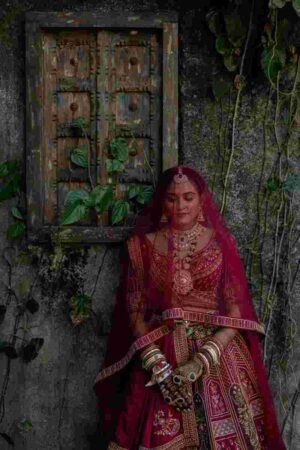
Bridal lehenga dupatta style: a heavily embroidered lehenga paired with a matching head-draped dupatta — exact match works here because the fabrics differ slightly in texture.
Bridal Double Dupatta Style: When Two Works Better Than One
The bridal double dupatta style involves wearing two dupattas simultaneously — one heavier dupatta draped over the head for ceremonies, and a second lighter dupatta across one shoulder for the reception. It has become one of the most requested looks in Indian wedding fashion for a practical reason: most brides want the traditional head-drape look for pheras and something more manageable for the rest of the evening.
What Makes the Bridal Double Dupatta Style Work
- Different weights: A heavy silk over the head with a lighter net on the shoulder looks intentional. Two identical net dupattas can look accidental.
- Secure pinning: The shoulder dupatta should be pinned firmly enough to stay in place while the head dupatta is removed. Use at least three pins on the shoulder piece.
- Consider lehenga weight: The overall volume adds physical weight. If your lehenga is already heavy, the double dupatta can make a long evening tiring. Factor that in.
- Colour doesn’t need to match: Many brides use a contrast second dupatta to pick up an accent tone from the lehenga. The two pieces should coordinate, not match exactly.
When It Doesn't Work as Well
Very lightweight or minimal lehengas where two dupattas overpower the outfit visually. Or for brides who find extra fabric physically restrictive — worth testing the full look before the wedding day.
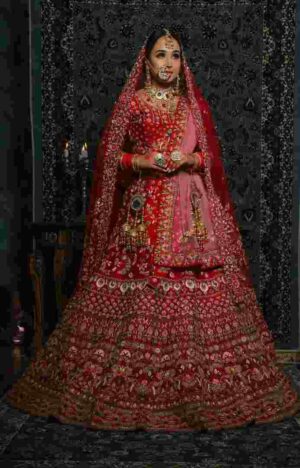
The bridal double dupatta style: one heavier dupatta worn over the head for ceremonies, with a lighter accent dupatta across the shoulder for the reception.
Color: Match, Contrast, or Coordinate
Exact match is the safe choice, not the only one. Contrast dupatta choices — deep red with a blush lehenga, gold with deep green — create more visual depth when the contrast color already appears somewhere in the lehenga’s embroidery. Tonal coordination (dusty rose with mauve, champagne with gold) is the middle path: cohesive without being matchy. Exact match works best when the fabric or embroidery on the dupatta differs enough from the lehenga to visually distinguish the two pieces.
Bridal Dupatta Trends in 2026
Indian bridal dupatta style in 2025 is moving toward personalisation over convention. A few patterns showing up consistently across bridal collections this year:
- Contrast dupattas with pastel lehengas: Deep jewel-toned dupattas — emerald, cobalt, burgundy — paired with soft blush, ivory, or mint lehengas.
- Tissue organza with 3D floral work: Lightweight organza dupattas with hand-stitched floral embroidery at the border. Photographs exceptionally well and significantly lighter than traditional silk options.
- Heirloom and vintage dupatta revival: Brides incorporating a grandmother’s or mother’s dupatta — either as the primary head drape or as the second dupatta in a double dupatta style.
- Minimal or no dupatta at reception: A growing number of brides skip the dupatta for reception functions, opting for heavily embellished blouses instead.
- Customised monogram borders: Personalised border embroidery with initials, wedding dates, or meaningful motifs — driven by bespoke bridal designers across Delhi, Mumbai, and Jaipur.
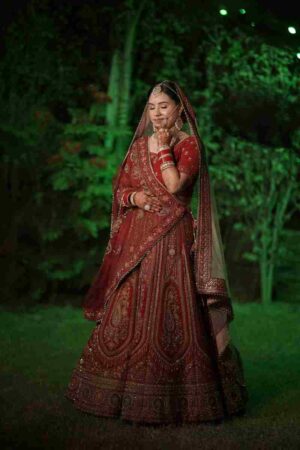
2026 bridal dupatta trends: net dupattas with heavy embroidered lehengas remain a top choice, with outdoor and garden weddings driving demand for lighter fabrics.
Wedding Fashion Tips for the Dupatta
- For pheras and ceremonies: Go with a head drape or bridal double dupatta style. The formality suits the moment, and you need a style that holds through rituals.
- For the reception: One-shoulder or front drape. You’re greeting people, possibly dancing, sitting for extended stretches. A slipping head drape becomes a distraction.
- For the vidai: Many brides switch to a full head drape for this moment — it frames it in photographs. Plan this switch in advance if you’re in a shoulder drape all evening.
- For mehendi and morning functions: A lightweight georgette or shorter dupatta is more practical. Save the elaborate version for the event it’s designed for.
- On safety pins: Use clear or colour-matched pins, not standard silver. They hold just as well and don’t appear in photographs. Have at least a dozen on hand.
Wedding fashion tip: a well-pinned dupatta stays in place all evening. Use clear pins and have your bridal team carry spares throughout the day.
Quick Reference: Dupatta by Outfit and Function
Outfit / Function | Dupatta Fabric | Best Draping Style |
Heavy silk or Banarasi lehenga | Net or lightweight georgette | One shoulder or front drape |
All-over embroidered lehenga | Border-work net | Head drape or back drape |
Sharara or Anarkali | Short dupatta or scarf length | One shoulder, loosely draped |
Pastel or light lehenga | Tissue silk or contrast georgette | Front drape or double dupatta |
Pheras / ceremony | Any heavier fabric | Head drape (ghunghat) |
Reception | Net or georgette | One shoulder or front drape |
Vidai | Heavier or heirloom fabric | Full head drape |
Frequently Asked Questions
How long should a bridal dupatta be?
Standard bridal dupattas run 2.5 to 3 metres. Longer dupattas up to 4 metres suit head drapes and cathedral-style veils. Around 2 metres works for sharara sets. Always check the length against your height before the wedding — an unhemmed dupatta on a petite bride trails badly and becomes a tripping hazard.
What is the bridal double dupatta style?
The bridal double dupatta style uses two dupattas simultaneously — one heavier dupatta draped over the head for pheras, and a lighter accent dupatta across one shoulder for the reception. It lets brides have the traditional ceremony look without staying in a head drape all evening.
How do I stop the dupatta from slipping all evening?
Use four to six pins minimum: two at the crown, one at each shoulder, and one inside the blouse strap — invisible from outside. Clear or colour-matched pins hold better than standard silver and don’t show in photographs. A properly pinned dupatta holds through a full evening.
Does my dupatta embroidery need to match my lehenga?
The pattern doesn’t need to match, but the thread colour and technique should be compatible. Zardozi on the lehenga with cutwork on the dupatta often reads as two separate outfits. Zardozi on both — even different motifs — holds together as a coordinated set.
Is it okay to skip the dupatta at a wedding?
For certain functions, yes. A heavily embellished blouse with a lehenga can stand alone at a cocktail reception. For pheras, the dupatta carries ritual significance in most Indian traditions and is generally expected. It depends on the specific function and what the outfit calls for.
How do you wear a dupatta on your head for bridal style?
Pin the dupatta at the crown with two pins, then add one pin at each shoulder. Use clear or colour-matched pins — invisible in photographs. For ghunghat style, let it drape forward over the face during rituals, then push it back between functions.
What is the trending bridal dupatta style in 2026?
Contrast dupattas with pastel lehengas, tissue organza with 3D floral embroidery, and heirloom dupatta revivals are the strongest 2026 trends. Minimal or no dupatta at reception functions is also gaining ground, with brides opting for heavily embellished blouses instead.
Is the bridal double dupatta style only for traditional weddings?
No. The double dupatta is practical, not strictly traditional. Any bride who wants the head-drape look for ceremonies and something more manageable for the reception can use it. It works equally well at modern and fusion weddings.
Every bridal dupatta style question answered: from dupatta length and draping to double dupatta styling and heirloom dupattas.