


If you’ve ever stood in front of a Kanjivaram-draped bride and found yourself genuinely unable to look away, there’s a good chance the jewellery had something to do with it. South Indian jewellery is heavy, gold, intricate, and completely unapologetic about all three. It doesn’t try to be subtle. It doesn’t need to be.
This guide is for whoever needs it — a bride-to-be figuring out where to even begin, a wedding guest who doesn’t want to show up underdressed, or just someone who finds herself deep in YouTube bridal makeover videos at midnight and wants to actually understand what she’s looking at.
What Makes South Indian Jewellery Different?
Let’s start with the obvious: the gold. South Indian jewellery is almost always yellow gold, and usually a lot of it. In Tamil Nadu, Kerala, Andhra Pradesh, and Karnataka, gold isn’t just pretty — it’s tied to auspiciousness, family legacy, and the goddess Lakshmi herself. A bride’s jewellery is rarely purchased just for the wedding; it’s meant to be worn at every major celebration for decades.
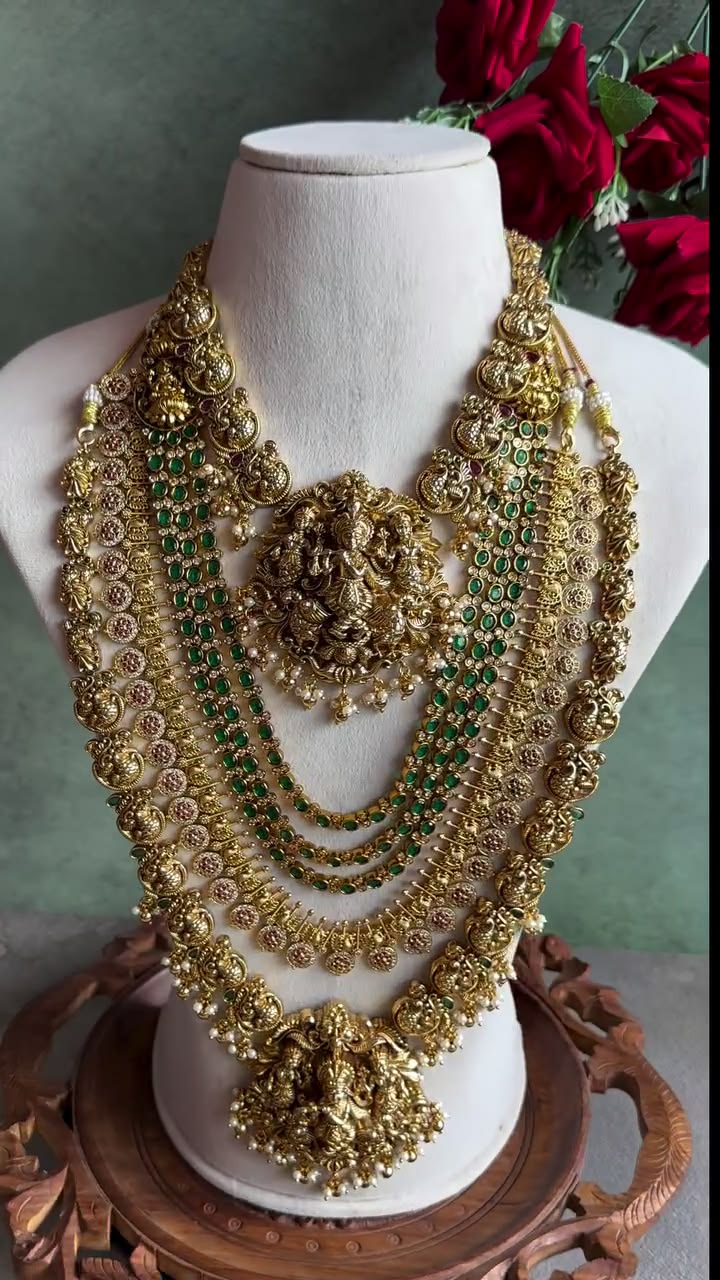
The craftsmanship runs deep too. Temple jewellery, which gets its name from jewellery made for adorning deity idols in South Indian temples, carries that same devotional quality into everyday wear. The motifs are recognizable once you know them: Lakshmi holding lotus flowers, peacocks mid-dance, mango shapes (called paisleys in Western terminology, but called maanga here), and rows of small coins. These aren’t decorative choices for the sake of it — each motif carries meaning, and jewellers have been passing down the techniques to carve and set them for generations.
What keeps South Indian jewellery from feeling old-fashioned is exactly this specificity. It has a point of view. A temple necklace doesn’t look like a Mughal choker or a Rajasthani borla — you know immediately where it comes from and what it means. That kind of visual identity doesn’t go out of style.
A few things worth knowing before you start styling: heavy temple jewellery belongs with heavy silk — Kanjivaram, Banarasi, or Pochampally. Don’t fight the weight of the jewellery with a light outfit; match it. If you’re going antique gold, lean into that too — bold eyes, a nude or deep lip, and let the jewellery carry the look. And if the necklace is doing a lot of work, scale back the earrings. A long haram with small studs looks far more considered than two competing statement pieces.
What Makes South Indian Jewellery Different?
There are a few pieces that show up at essentially every South Indian wedding, and it’s worth knowing what they are before you walk into a jewellery store.
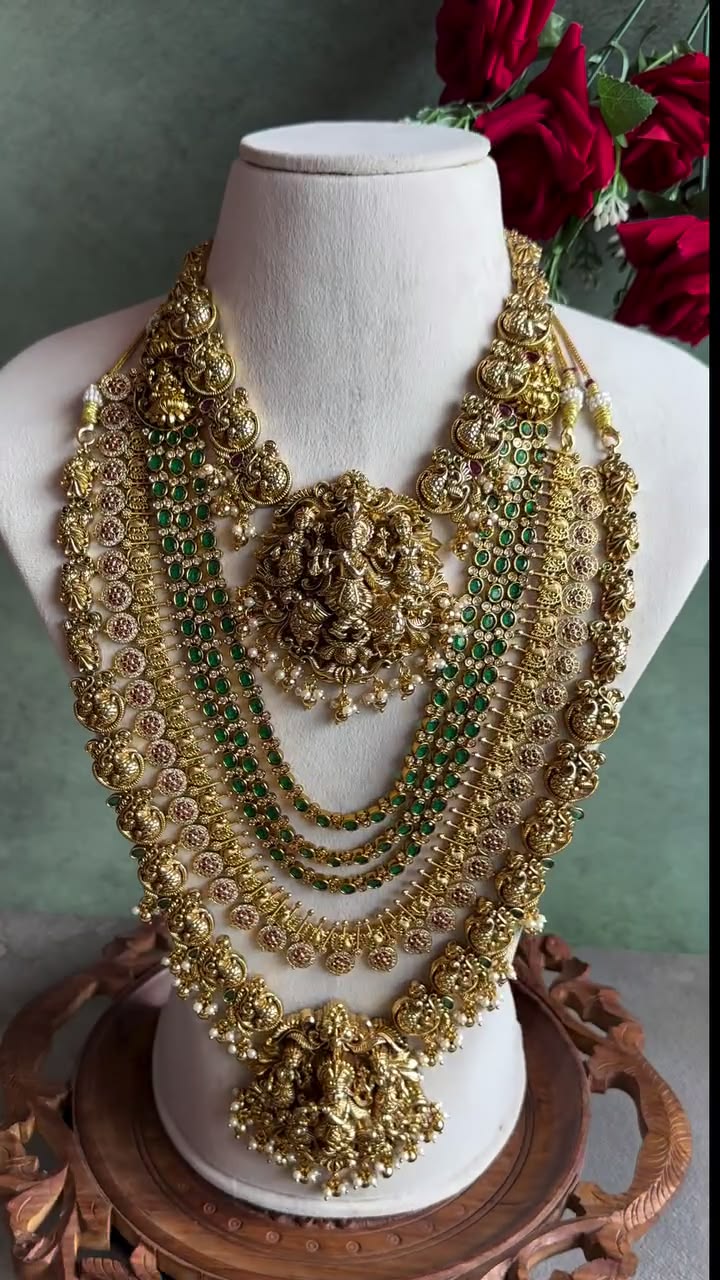
Haram — The long necklace that sits at chest level. This is often the centrepiece of a bridal look. It can be a single strand or layered, and usually features goddess motifs or coin detailing.
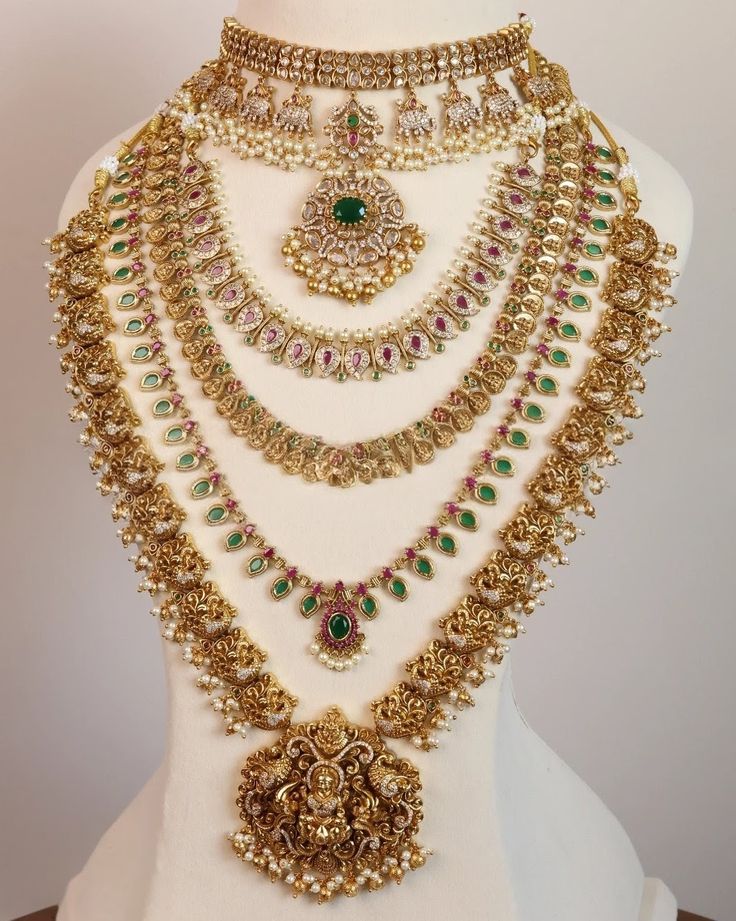
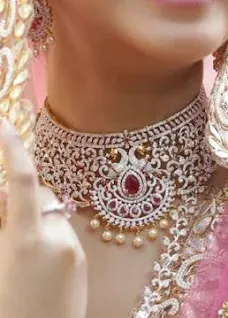
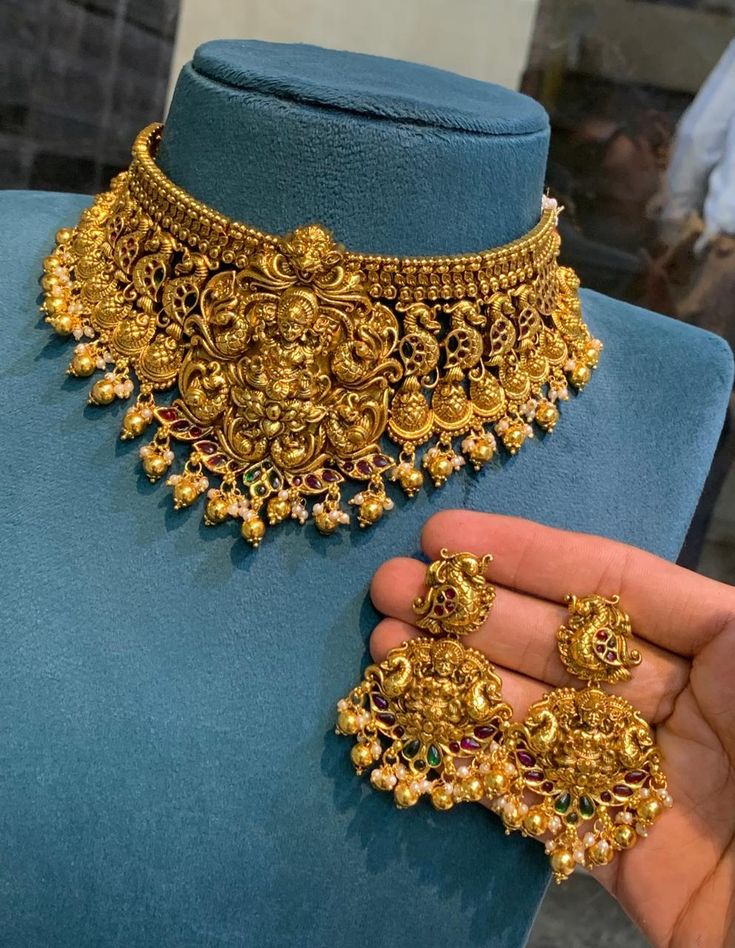
Choker set — Sits higher on the neck. Brides often wear a choker and a haram together for a layered look, though either piece alone works beautifully for non-wedding occasions.
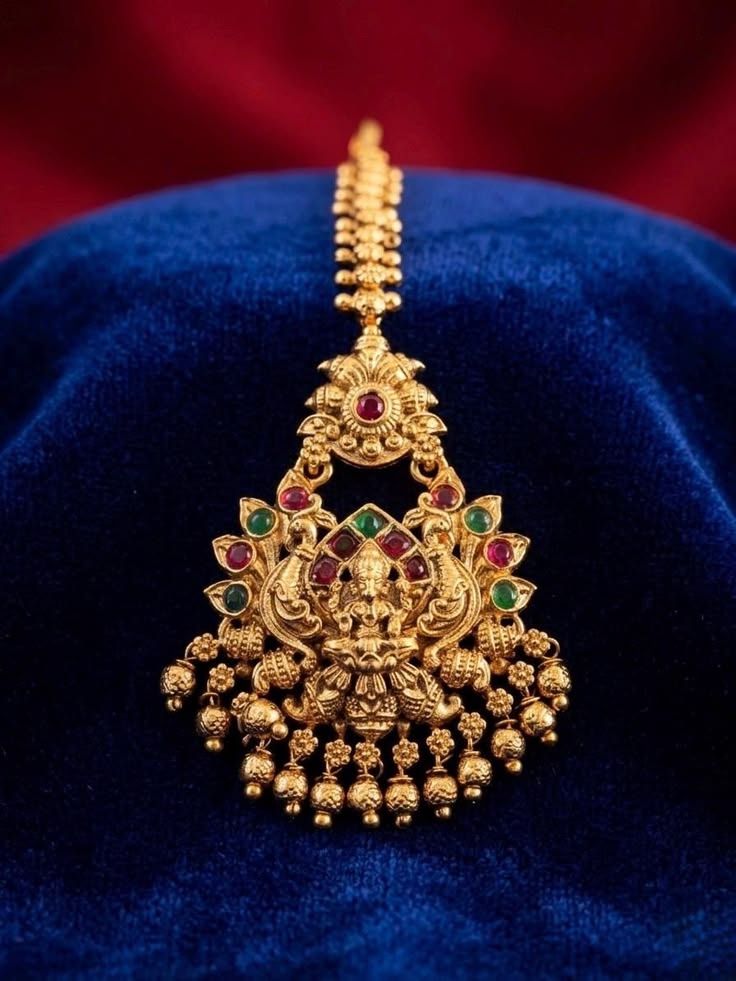
Nethi chutti / Maang tikka — The forehead ornament that sits along the centre parting. In South Indian styling, the nethi chutti tends to be more delicate than North Indian maang tikkas, hugging the hairline rather than dangling from a chain.
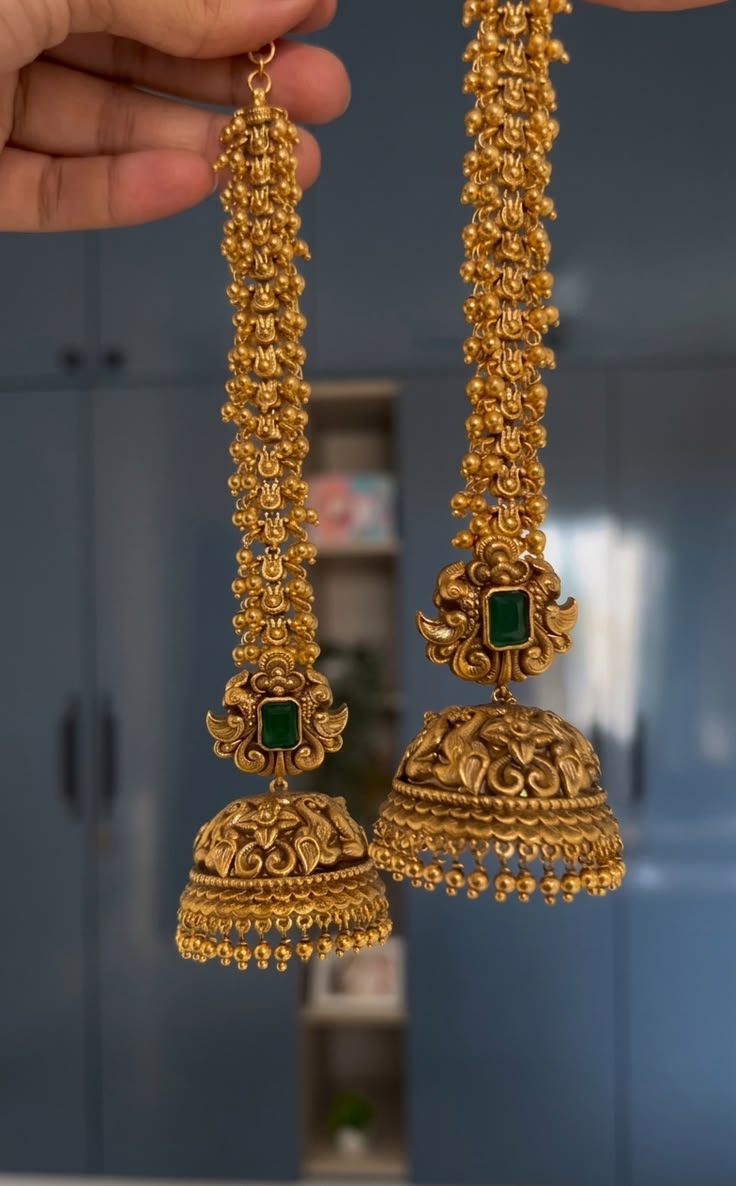
Jhumkas — These need no introduction. The bell-shaped earrings with a tiny dangling cluster at the bottom. Every woman owns at least one pair, and most own several. Jhumkas work with a saree, a kurta, jeans — they’re the one piece of South Indian jewellery that’s fully crossed over into everyday wear.
Oddiyanam — The waist belt. This is usually reserved for brides, and it’s genuinely transformative. A good oddiyanam pulls the entire look together and makes even a simple saree drape look intentional.
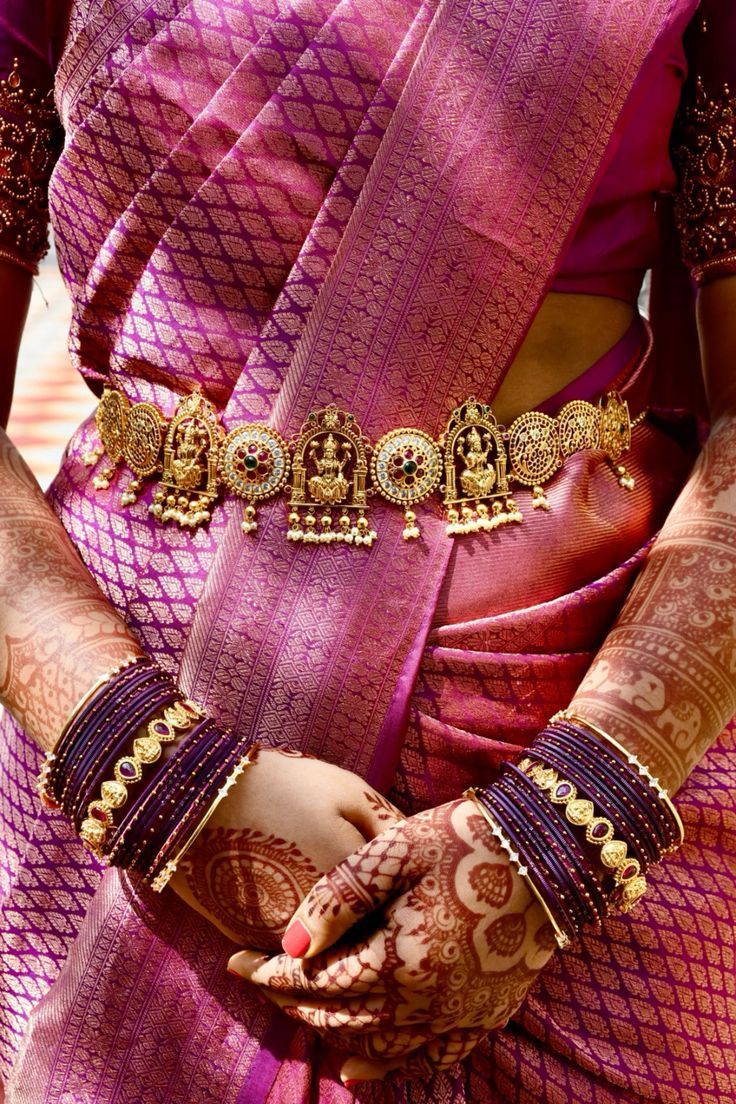
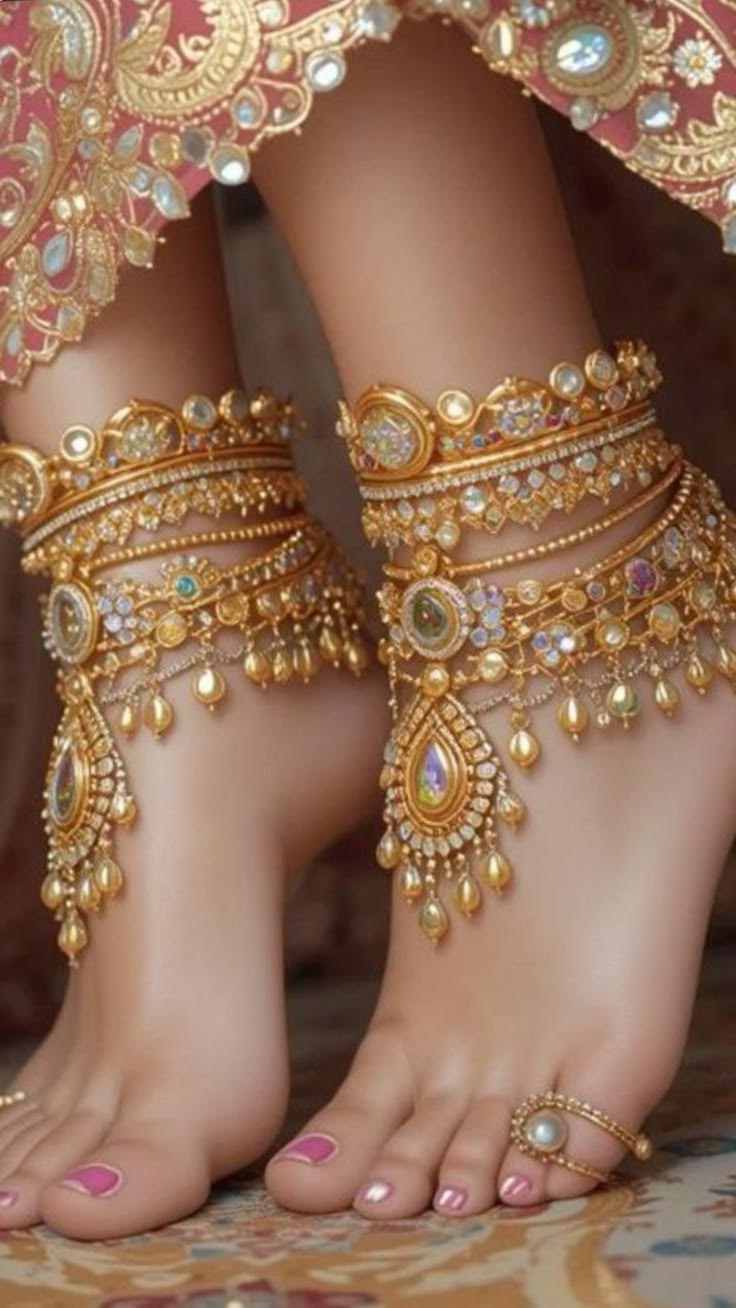
Temple bangles, anklets, and toe rings — These round out the complete bridal look. Toe rings (metti) are traditionally worn by married women, and anklets (payal) add a soft sound and movement to the look.For layering: wear the choker and haram together, but make sure the lengths are visually distinct — they should sit at clearly different levels, not crowd each other. If your blouse is heavily embroidered, pull back on the necklace entirely. A statement nethi chutti and elegant earrings will do more than a full necklace set competing with the fabric. And if you can, match the motif in your jewellery to your saree border — peacock border with peacock jhumkas, mango motif with mango-patterned bangles. It doesn’t have to be exact, but when it lands it looks genuinely intentional.
Antique vs Modern: Which One Is Right for You?
This comes up constantly, and honestly, the answer is usually: depends on the occasion and what you’re drawn to.
Antique jewellery has a matte, oxidized finish — it looks like something that’s been in a family for generations, even when it’s brand new. The colour is a warm, slightly dark gold, and the motifs are carved rather than set with stones. It photographs beautifully and pairs especially well with dark silks — deep reds, bottle greens, navy blues.
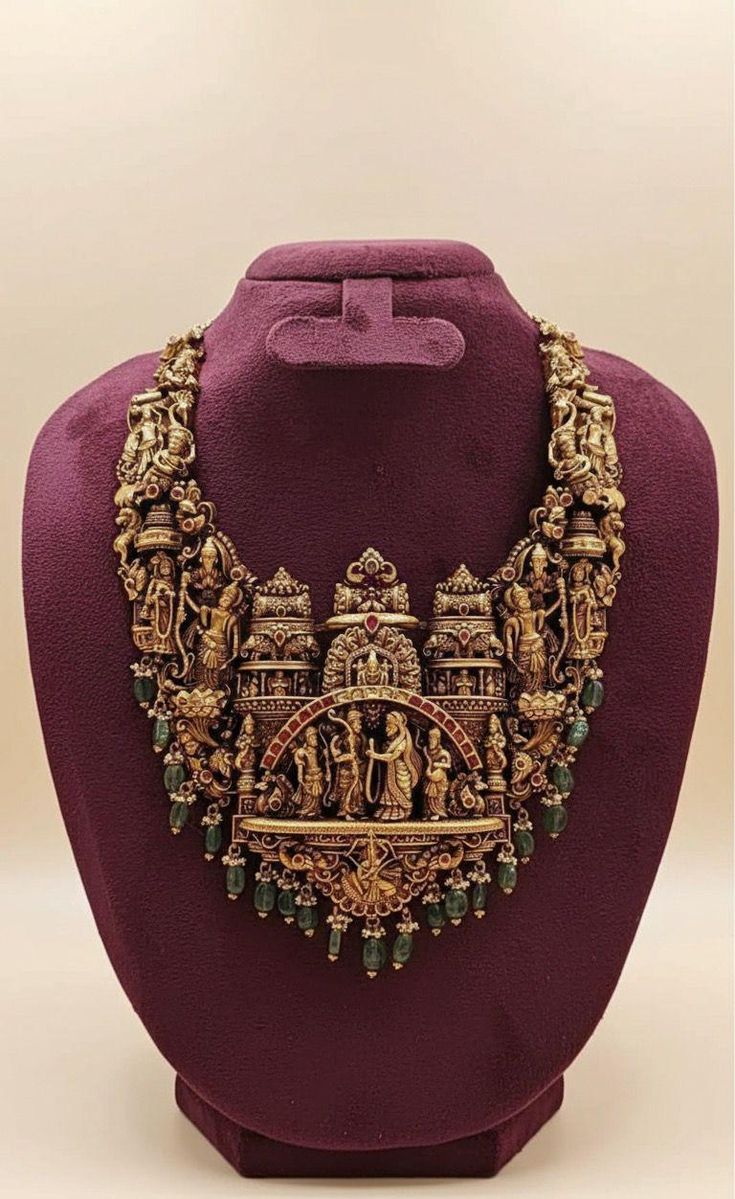
Modern temple jewellery mixes traditional motifs with diamonds, uncut diamonds (polki), or coloured stones. It’s brighter, more formal-looking, and fits beautifully into the reception or engagement aesthetic. If you’re wearing a pastel lehenga or something with a lighter colour palette, modern diamond-temple fusion is going to complement that far better than an antique set would.
For pre-wedding functions — mehndi, sangeet, haldi — lightweight jewellery makes more practical sense. You’re dancing, sitting on the floor, moving around. This is where you wear your second-best pieces or something more contemporary and comfortable.
One thing worth knowing: you can mix periods. Traditional antique earrings with a modern stone-set choker works if the metal tones are consistent. And if you consider yourself a minimal bride, resist the pressure to wear everything at once. One well-chosen statement piece and simple studs is a complete look — it often reads as more confident than a full loaded set. For receptions, a single temple choker or a traditional waist belt worn against a contemporary gown can look unexpectedly striking.
Styling South Indian Jewellery for Different Occasions
Most people think of this jewellery as exclusively bridal. It isn’t. The same design language scales up and down depending on how you wear it.
Weddings (as a guest): You don’t need to go full bridal. A good antique choker, jhumkas, and gold bangles with a silk saree is plenty. You look traditional, put-together, and appropriately festive without upstaging anyone.
Engagements: This is where you can go slightly heavier than a regular function but lighter than the wedding itself. A semi-bridal set — haram or statement necklace with matching earrings — works well. Pastel sarees and light silk lehengas are popular choices.
Festivals (Navratri, Pongal, Diwali): This is actually where South Indian jewellery is at its most fun. Wear your jhumkas with a kurti and palazzo. Wear an antique choker with a plain cotton saree. The contrast between simple fabric and ornate jewellery is a classic pairing for a reason.
Family functions and casual gatherings: Layered thin gold chains, small gold earrings, a simple bangle stack. Traditional without being overdressed.
Contemporary ethnic parties / receptions: This is where experimentation works. Traditional jhumkas with a structured blazer and cigarette pants? It works. A temple armlet on an otherwise modern outfit? It adds an interesting tension that usually lands well.
How to Shop Without Getting Burned
South Indian jewellery can be expensive, and the market has a lot of imitation pieces that aren’t always labelled clearly. A few things to know before you go shopping:
Real temple jewellery is traditionally made with gold and set with semi-precious stones — rubies, emeralds, and uncut diamonds. The finish is detailed and slightly three-dimensional. If it looks very flat and lightweight, it’s probably fashion jewellery.
Imitation/fashion jewellery isn’t bad — it’s just not gold. Good quality imitation temple jewellery (often called gold-plated or one-gram gold) can look almost identical and is perfectly appropriate for guests or for low-wear occasions. The difference shows over time: gold-plated pieces lose their colour, and real gold doesn’t.
Look for hallmark certification on any real gold jewellery you buy. In India, BIS hallmarked jewellery with a six-digit HUID code is the standard. This tells you the gold purity and that it’s been verified.
Budget ideas: If you’re on a tight budget for the wedding, consider renting the heavy bridal set — oddiyanam, haram, full necklace — and investing in pieces you’ll actually wear for years: a pair of jhumkas, a good choker, a set of bangles. These see far more use than a one-time bridal set.
For storage: Keep antique jewellery separate from other pieces. The oxidized finish can transfer. Wrap each piece in soft cloth and store in a dry place away from perfumes and moisture.
FAQ
1. What exactly is temple jewellery?
Temple jewellery was originally made by craftsmen — particularly from the Nattukotai Chettiar community and goldsmiths in Andhra and Tamil Nadu — specifically for adorning deity idols in South Indian temples. The pieces were large, gold, and carved with religious motifs: goddess Lakshmi, Saraswati, peacocks, lotuses. Over time, dancers (particularly Bharatanatyam performers) started wearing the same designs as costume jewellery, and it gradually moved into mainstream bridal and festival wear. The name stuck. Today, “temple jewellery” refers to any jewellery in this design style, whether it’s used in actual temples or not.
2. Why is most South Indian jewellery made of gold?
Gold has deep religious significance in Hindu culture — it’s associated with Lakshmi, the goddess of wealth and prosperity, and is considered auspicious for weddings and ceremonies. In South India particularly, gold is also a traditional form of streedhan, meaning wealth that belongs to the woman. Historically, a bride’s jewellery was her financial security, not just an accessory. This is why South Indian families often invest heavily in gold jewellery across generations. The cultural weight behind it is very real.
3. What jewellery does a South Indian bride typically wear?
A full South Indian bridal look usually includes: a nethi chutti (forehead ornament), a choker necklace, a long haram, jhumka earrings, vanki armlets on both arms, an oddiyanam waist belt, temple bangles, anklets, and toe rings. This varies by community and region — a Tamil Brahmin bride’s look differs somewhat from a Telugu bride’s or a Keralite bride’s — but the gold-heavy, layered approach is consistent across most South Indian traditions.
4. Is temple jewellery always real gold?
No. The term “temple jewellery” refers to the design style, not the material. Authentic temple jewellery made for fine occasions is typically 22-karat gold, but there is a huge market for gold-plated brass and copper pieces in the same design language. These are often called “1-gram gold” or “imitation jewellery” and are widely sold for fashion wear, dance costumes, and non-bridal occasions. If you’re buying and the price seems surprisingly low for gold, it’s almost certainly plated.
5. Which state is most famous for temple jewellery?
Tamil Nadu — specifically the town of Nagercoil in the Kanyakumari district, and the broader Thanjavur region — is considered the heartland of traditional temple jewellery. Andhra Pradesh (especially Kakinada and Hyderabad) is also well-known, particularly for the Kondapalli and Nakkasi styles. If you’re looking for the most traditional craftsmanship, these are the regions with the deepest-rooted goldsmiths. That said, Chennai’s T. Nagar jewellery district has become the most accessible place to shop for temple jewellery — it’s basically an entire neighbourhood of jewellery stores.